
When construction, telecommunications, infrastructure or civil work takes place around active roads, managing the movement of vehicles and pedestrians becomes an important part of workplace safety.
One of the most familiar tools used in traffic control is the Stop-Slow Bat. But effective traffic control involves much more than displaying a STOP or SLOW sign. It requires clear communication, good positioning, situational awareness and an understanding of the traffic management arrangements in place.
At a broader level, a traffic management plan helps establish how vehicles, pedestrians and worksite activities will be managed around a project.
So, what exactly is Stop-Slow Bat traffic control, how does a traffic management plan work, and what skills do workers need to manage traffic safely?
This guide explains the fundamentals in an easy-to-understand Australian workplace context.
What Is a Stop-Slow Bat?
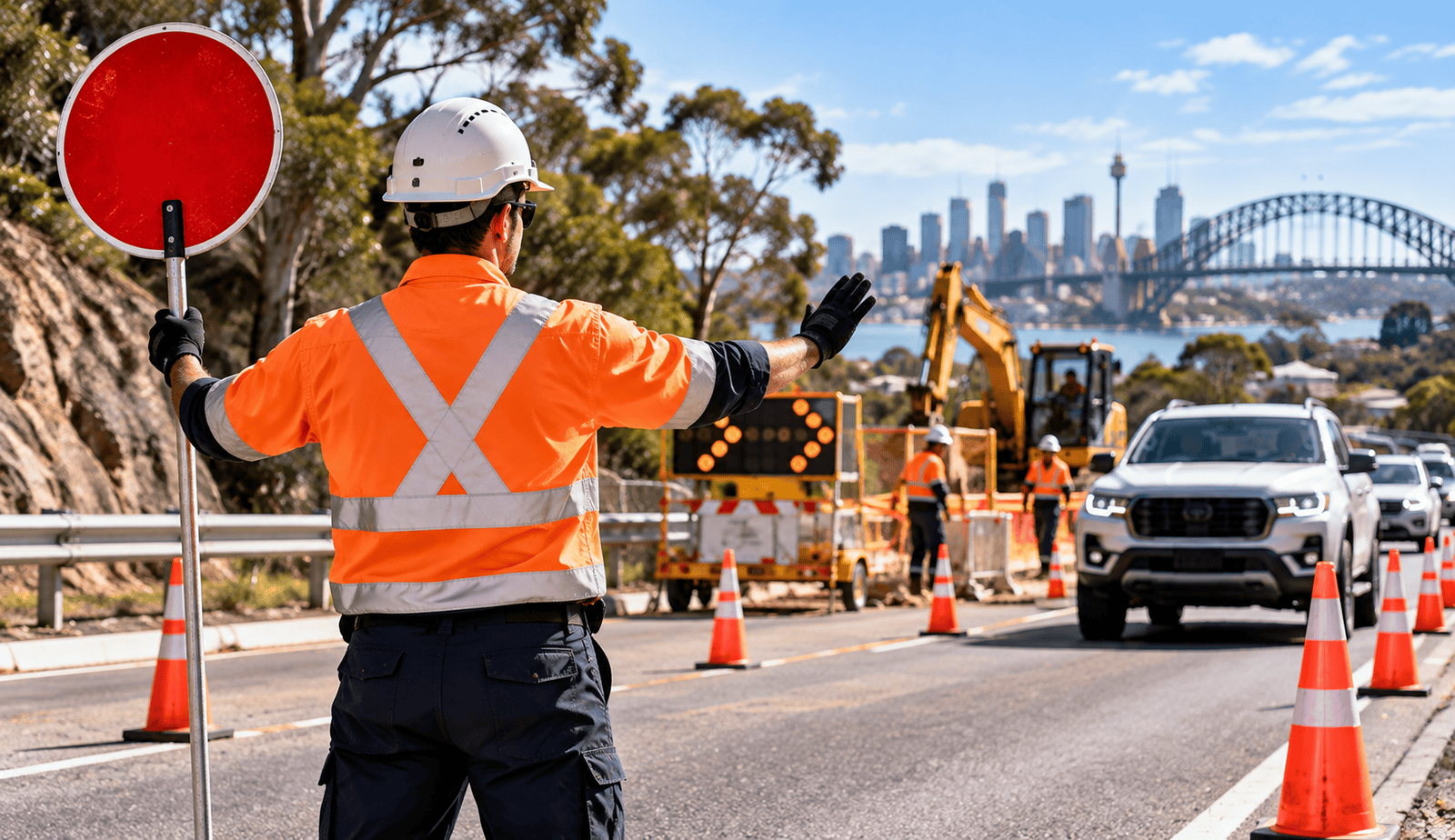
A Stop-Slow Bat is a hand-held traffic control device used by appropriately trained personnel to provide visual instructions to road users.
It normally has two sides:
- STOP – instructing approaching traffic to stop
- SLOW – instructing traffic to proceed cautiously or at a reduced speed
The device provides a simple visual communication method between traffic controllers and approaching drivers.
However, using a Stop-Slow Bat effectively requires more than knowing which side to display. The controller must consider traffic conditions, visibility, vehicle movements, pedestrians, road layout and the overall worksite environment.
How Does Stop-Slow Bat Traffic Control Work?
The basic principle is straightforward: a trained traffic controller uses clear visual signals to communicate with drivers.
The controller needs to remain visible to approaching road users while maintaining a safe position and following the traffic control arrangements established for the worksite.
Effective Stop-Slow Bat traffic control involves:
- Clear and consistent signals
- Appropriate positioning
- Good visibility
- Awareness of approaching vehicles
- Monitoring pedestrian movements
- Communication with other workers
- Understanding the worksite traffic arrangements
- Responding appropriately to changing conditions
The objective is to reduce confusion and help traffic move through or around a work area in a controlled manner.
Why Is Traffic Control Important on Worksites?
Construction and infrastructure projects can significantly change normal traffic conditions.
For example, a project may involve temporary lane restrictions, construction vehicles entering a site, pedestrian diversions, roadworks or equipment operating close to moving traffic.
These activities can create potential conflict points between:
- Workers and vehicles
- Pedestrians and vehicles
- Construction equipment and road users
- Delivery vehicles and worksite personnel
- Vehicles travelling in different directions
Appropriate traffic controls can help manage these interactions and reduce unnecessary risks.
Traffic control is therefore an important part of planning safe work around roads and other active traffic environments.
What Skills Does a Traffic Controller Need?
Traffic control is a practical responsibility that requires workers to stay alert and communicate effectively.
Clear Communication
Drivers need to understand traffic instructions quickly.
Traffic controllers should use clear, consistent signals and follow the established traffic control procedures for the worksite.
Situational Awareness
A traffic controller needs to monitor more than the vehicle directly in front of them.
They may need to watch for:
- Approaching vehicles
- Pedestrians
- Trucks and buses
- Construction plant
- Workers entering the area
- Vehicles changing direction
- Unexpected movements
- Changing weather and visibility
Strong situational awareness helps controllers identify developing hazards early.
Safe Positioning
The controller’s position is an important safety consideration.
Traffic controllers should follow the site’s traffic control arrangements and position themselves where they can communicate effectively without unnecessarily exposing themselves to moving traffic.
Decision-Making
Traffic conditions can change quickly.
Controllers need to remain focused and respond appropriately to changing circumstances while staying within their training, authority and established procedures
What Is a Traffic Management Plan?
A Traffic Management Plan (TMP) is a documented plan for managing traffic around a worksite or project.
It considers how vehicles, pedestrians and work activities will interact and identifies appropriate controls for the specific environment.
Depending on the project, a traffic management plan may consider:
- Road conditions
- Traffic volumes
- Vehicle movements
- Pedestrian movements
- Worksite entry and exit points
- Temporary traffic arrangements
- Signage
- Barriers and delineation
- Construction activities
- Emergency access
- Traffic controller locations
- Changes to traffic conditions
The exact requirements depend on the type of project, location and applicable Australian requirements.
Why Is a Traffic Management Plan Important?
A traffic management plan helps project teams think about traffic-related hazards before work begins.
Instead of relying on workers to make decisions independently as situations occur, the plan provides an organised framework for managing traffic around the work area.
A suitable plan can help:
- Identify traffic hazards
- Separate vehicles and pedestrians where appropriate
- Establish traffic controls
- Coordinate worksite movements
- Improve communication
- Support safer vehicle access
- Reduce confusion around temporary road changes
- Maintain safer movement around the work zone
Good traffic management is therefore closely connected to good project planning.
How Do You Implement a Traffic Management Plan?
Creating a plan is only the beginning. The arrangements also need to be implemented correctly and monitored throughout the project.
- Understand the Worksite
Start by understanding the location and nature of the work.
Consider:
- Where vehicles will enter and leave
- Where workers will operate
- Where pedestrians will travel
- Existing traffic conditions
- Worksite boundaries
- Construction equipment
- Delivery movements
- Potential conflict points
- Identify Traffic Hazards
Look for situations where people, vehicles or machinery could interact.
Common examples include:
- Reversing vehicles
- Blind spots
- Limited sight distance
- Narrow lanes
- High traffic volumes
- Pedestrian crossings
- Temporary road closures
- Construction vehicles entering public roads
- Establish Appropriate Controls
Traffic controls should be selected according to the risks and the requirements of the project.
Depending on the circumstances, controls may include:
- Traffic controllers
- Stop-Slow Bats
- Signs
- Cones
- Barriers
- Delineation
- Pedestrian management
- Temporary traffic arrangements
- Controlled site entry and exit
- Communicate the Arrangements
Workers, traffic controllers, drivers and other relevant personnel need to understand the traffic arrangements that apply to them.
Clear communication helps ensure everyone understands:
- Vehicle routes
- Pedestrian routes
- Entry and exit points
- Traffic controller instructions
- Site restrictions
- Changes to traffic conditions
- Monitor and Review
Worksites are constantly changing.
A traffic management arrangement that works in the morning may need to be reconsidered later because of changes in work activities, traffic volumes, weather or site layout.
Ongoing monitoring is therefore essential.
What Is the Difference Between Traffic Control and Traffic Management?
Although these terms are closely connected, they describe different aspects of worksite traffic safety.
| Traffic Control | Traffic Management |
| Focuses on controlling traffic movements | Covers the broader traffic system |
| Can involve a Stop-Slow Bat | Can involve a Traffic Management Plan |
| Requires communication with road users | Requires planning and coordination |
| Often involves immediate traffic direction | Covers worksite-wide traffic arrangements |
| Focuses on practical control | Includes planning, implementation and monitoring |
In simple terms, traffic management provides the broader framework, while traffic control helps put appropriate traffic arrangements into practice.
Why Situational Awareness Matters in Traffic Control
Traffic control requires continuous attention.
A controller may be monitoring approaching vehicles while also watching pedestrians, construction equipment and other workers.
For example, a delivery truck could arrive at the same time as construction equipment is moving across the work area. A pedestrian could also approach a temporary crossing.
Situational awareness means recognising these interactions rather than focusing on only one part of the environment.
Traffic controllers should remain alert to:
- Unexpected vehicle movements
- Pedestrians entering controlled areas
- Vehicles failing to follow instructions
- Changes in visibility
- Congestion
- Construction equipment
- Weather conditions
- Changes to the worksite layout
This awareness can support faster and more appropriate responses when conditions change.
How Does Weather Affect Traffic Control?
Weather can influence both drivers and traffic controllers.
Rain, fog, strong sunlight, wind and poor lighting may affect:
- Visibility
- Road conditions
- Driver behaviour
- Sign visibility
- Communication
- Traffic controller visibility
- Vehicle stopping distances
Traffic management arrangements should account for environmental conditions that may affect the safety or effectiveness of traffic controls.
Where conditions become unsafe, workers should follow the relevant workplace procedures for stopping work, escalating concerns or reviewing the traffic arrangements.
Traffic Management in Construction and Infrastructure
Traffic management is particularly important in industries where work takes place around roads, public areas or existing infrastructure.
This includes:
- Construction
- Civil works
- Telecommunications
- Utilities
- Road maintenance
- Infrastructure projects
- Excavation
- Public works
- Site maintenance
Telecommunications projects, for example, may involve workers, service vehicles and equipment operating close to roads, footpaths or public access areas.
A well-planned traffic management approach can help coordinate these activities and reduce unnecessary interactions between workers and moving traffic.
Why Is Traffic Control Training Important?
Traffic control involves practical workplace risks, which is why appropriate training and competency are important.
Training can help workers understand:
- Traffic control procedures
- Stop-Slow Bat use
- Communication techniques
- Hazard identification
- Safe positioning
- Situational awareness
- Traffic management principles
- Worksite coordination
- Emergency procedures relevant to their role
Practical training can also give participants an opportunity to apply their knowledge in controlled scenarios.
However, the exact training or competency requirements depend on the worker’s role, project, location and applicable Australian requirements.
Is Stop-Slow Bat Training the Same as Traffic Management Training?
No, they are related but not necessarily the same.
Stop-Slow Bat training focuses on the skills and procedures involved in controlling traffic using visual signals.
Traffic management training can cover broader principles relating to the planning, implementation and monitoring of traffic movements around work activities.
The appropriate training depends on the responsibilities of the worker and the requirements of the project.
Before enrolling, workers should confirm which training or competency is required for their particular role.
Australian Traffic Management: Why Local Requirements Matter
Traffic management requirements can vary across Australian states and territories.
Projects may need to consider relevant:
- Road authority requirements
- State or territory legislation
- Work health and safety requirements
- Project specifications
- Workplace procedures
- Applicable standards and guidance
This means workers should avoid assuming that a traffic control procedure used on one project automatically applies to another.
Always check the requirements that apply to the specific worksite, jurisdiction and role.
How Can Workers Improve Their Traffic Control Skills?
Workers can strengthen their traffic control capabilities by developing consistent safety habits.
Understand the Plan
Know the traffic arrangements before beginning work.
Stay Alert
Avoid distractions and continuously monitor the surrounding environment.
Communicate Clearly
Use established communication methods and maintain clear communication with other workers and controllers.
Maintain Visibility
Follow workplace requirements relating to high-visibility clothing and safe positioning.
Monitor Changes
Remain aware of changes to traffic, weather, worksite layout and vehicle movements.
Report Hazards
If traffic arrangements become ineffective or an unexpected hazard develops, report it through the appropriate workplace process.
Frequently Asked Questions About Stop-Slow Bat Traffic Control
What is a Stop-Slow Bat?
A Stop-Slow Bat is a hand-held traffic control device used by appropriately trained personnel to communicate STOP or SLOW instructions to road users.
What is a traffic management plan?
A traffic management plan is a documented approach for managing vehicle and pedestrian movements around a worksite or project.
Why is Stop-Slow Bat traffic control important?
It provides a clear visual method for communicating with drivers when traffic needs to be controlled around work activities.
What does a traffic controller do?
A traffic controller helps manage traffic movements according to the traffic control arrangements established for the worksite and communicates instructions to road users.
What skills are important for traffic control?
Important skills include communication, situational awareness, safe positioning, hazard recognition and understanding applicable traffic control procedures.
How do you implement a traffic management plan?
Implementation involves understanding the worksite, identifying traffic hazards, establishing appropriate controls, communicating the arrangements and continuously monitoring conditions.
Can traffic management plans change?
Yes. Worksite conditions can change because of construction activities, traffic volumes, weather, pedestrian movements or changes to the site layout. Traffic arrangements should be reviewed according to the applicable requirements and procedures.
Is traffic control training required in Australia?
Training and competency requirements depend on the worker’s role, location, project and applicable requirements. Workers should confirm the specific requirements relevant to their work.
Final Thoughts: Safer Traffic Control Starts with Better Planning
Effective traffic control is about far more than holding a Stop-Slow Bat.
It combines planning, communication, situational awareness, hazard identification, safe positioning and ongoing monitoring.
A traffic management plan provides the broader framework for managing vehicles and pedestrians around a worksite, while trained traffic control personnel help implement the relevant traffic arrangements safely and consistently.
For Australia’s construction, telecommunications, infrastructure and civil industries, understanding these principles can contribute to better-organised worksites and safer interactions between workers, vehicles and pedestrians.
If you are looking for traffic control training or training related to implementing traffic management plans, choose a program that matches your role, industry and applicable Australian requirements.
MILCOM Institute provides relevant training for workers developing practical skills for telecommunications, infrastructure and related work environments.
Because effective traffic management isn’t just about controlling traffic — it’s about creating a safer environment for everyone sharing the road and worksite.