
Why Gas Test Atmospheres Training Is Critical for Worker Safety
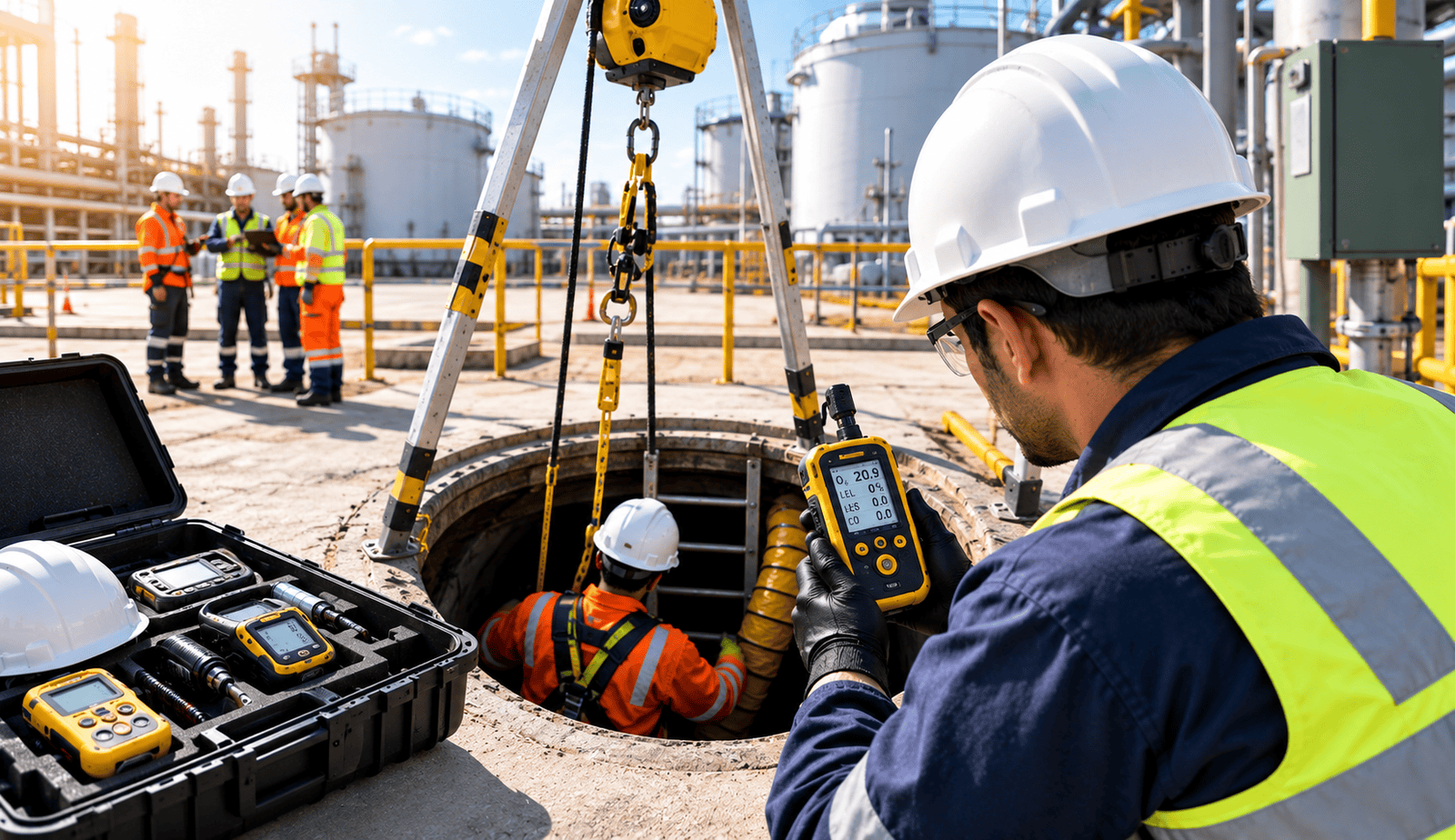
Working in a confined space can be dangerous and, in some situations, life-threatening. Workers may face hazardous gases, oxygen deficiency, explosive atmospheres, limited movement, and other serious workplace risks.
Real-world examples include workers entering:
- Drains and sewers
- Storage tanks
- Silos
- Underground telecommunications networks
- Mines
- Industrial facilities
- Oil and gas sites
Without proper safety knowledge and Gas Test Atmospheres Training, entering these environments can put workers at significant risk.
MILCOM’s Gas Test Atmospheres Training helps workers develop the knowledge and practical skills required to identify potentially hazardous atmospheric conditions before and during work.
What Is Gas Test Atmospheres Training?
Gas Test Atmospheres Training is a workplace safety course designed to teach workers how to test and monitor atmospheric conditions using electronic gas detection equipment.
The training helps participants understand how to:
- Identify hazardous gases
- Test atmospheric conditions before entering a workspace
- Monitor potentially dangerous environments
- Interpret gas detector readings
- Recognise oxygen deficiency or enrichment
- Identify potentially explosive atmospheres
- Respond appropriately to unsafe atmospheric conditions
Quick Answer: Why Is Gas Testing Important?
Gas testing is important because hazardous gases may not always be visible or easily detected by smell. Testing the atmosphere before entering a confined or potentially hazardous space helps workers identify risks and make informed safety decisions.
MILCOM Gas Test Atmospheres Training: International-Standard Safety Education
MILCOM Communications is committed to delivering high-quality safety awareness and technical training for professionals working in telecommunications and other technical industries.
Our training programs are designed to support workers in developing the knowledge, awareness, and practical competence required to work safely across different environments.
MILCOM’s Gas Test Atmospheres Training provides participants with practical safety knowledge in a supportive learning environment while reinforcing the importance of workplace safety standards and responsible work practices.
The course is particularly relevant for workers who may encounter potentially hazardous atmospheric conditions while performing their duties.
Who Should Complete Gas Test Atmospheres Training?
Gas Test Atmospheres Training can benefit workers and technicians operating in environments where atmospheric hazards may exist.
This may include professionals working in:
- Telecommunications
- Mining
- Oil and gas
- Industrial cleaning
- Construction
- Underground infrastructure
- Maintenance operations
- Technical security industries
- Confined or restricted workspaces
Workers who are required to assess atmospheric conditions before entering a workspace can benefit from developing the appropriate gas testing knowledge and skills.
Gas Test Atmospheres Training Near Me in Melbourne
If you are searching online for “Gas Test Atmospheres Training Near Me” in Melbourne, MILCOM provides professional safety training designed for workers operating in potentially hazardous environments.
The course is particularly relevant to workers who may need to monitor atmospheric conditions within communications carrier networks and other technical workplaces.
Participants learn how to use electronic testing equipment to assess the working environment and determine whether conditions are appropriate for the proposed work.
The training focuses on practical knowledge, including how to conduct atmospheric testing, interpret readings, and respond appropriately to potentially unsafe conditions.
What Will You Learn in Gas Test Atmospheres Training?
MILCOM’s experienced instructors provide practical guidance to help trainees understand the principles of atmospheric testing and workplace safety.
During the training, participants learn important questions such as:
When Is Gas Testing Required?
Workers learn how to recognise situations where atmospheric testing may be necessary before entering or working within a potentially hazardous environment.
How Do You Conduct Gas Testing?
Participants gain knowledge about using electronic gas detection equipment and understanding the testing process.
How Do You Know if an Atmosphere Is Safe to Work In?
The course helps participants understand how atmospheric readings can be interpreted to identify potential hazards and support workplace safety decisions.
MILCOM Gas Test Atmospheres Training Course Outline
MILCOM’s Gas Test Atmospheres Training covers important theoretical and practical aspects of atmospheric monitoring and gas detection.
- Legislative Framework for Gas Detection
Understand the workplace safety framework and the importance of following appropriate procedures when testing atmospheric conditions.
- Identifying When Gas Testing Is Required
Learn how to recognise situations where gas testing may be necessary before work begins.
- Supervisor Responsibilities
Understand the responsibilities associated with supervising work in potentially hazardous environments.
- Gas Testing and Permit Requirements
Learn about the role of permits and workplace procedures related to gas testing and hazardous work environments.
- Atmospheric Monitoring and Risk Assessment
Understand the importance of monitoring atmospheric conditions and identifying potential workplace risks.
- Confined Space Permit Requirements
Explore the role of confined space procedures and permits when working in restricted environments.
- Understanding Common Atmospheric Hazards
The course covers awareness of important atmospheric hazards, including:
- Oxygen deficiency
- Oxygen enrichment
- Lower Explosive Levels (LEL)
- Carbon monoxide
- Hydrogen sulfide
- Methane
- Other potentially hazardous gases
- Understanding Exposure Limits
Participants learn about important workplace exposure concepts, including:
- TWA (Time Weighted Average)
- STEL (Short-Term Exposure Limit)
- IDLH (Immediately Dangerous to Life or Health)
- Gas Densities and Workplace Implications
Learn how the density of different gases can affect where gases may accumulate within a work environment.
- Gas Testing Log Sheets and Documentation
Understand the importance of maintaining appropriate records of atmospheric testing activities.
- Gas Detector Maintenance
Learn about the importance of maintaining gas detection equipment to support reliable workplace monitoring.
- Testing and Calibration Requirements
Understand why testing, calibration, and equipment checks are important for accurate gas detection.
Why Is Gas Testing Essential Before Entering a Confined Space?
Before entering a confined or potentially hazardous environment, workers may need to understand whether the atmosphere contains conditions that could create a serious risk.
Potential atmospheric hazards can include:
- Insufficient oxygen
- Excessive oxygen levels
- Flammable gases
- Toxic gases
- Harmful vapours
Because some gases cannot be easily detected without appropriate equipment, electronic gas testing plays an important role in workplace safety procedures.
Proper training helps workers understand how to use testing equipment and interpret atmospheric readings appropriately.
Key Benefits of Gas Test Atmospheres Training
Completing professional Gas Test Atmospheres Training can help workers develop greater awareness of workplace atmospheric hazards.
Key benefits include:
Improved Workplace Safety Awareness
Learn how atmospheric hazards can affect workers in confined and potentially hazardous environments.
Better Understanding of Gas Detection Equipment
Develop knowledge about the use and purpose of electronic gas testing equipment.
Improved Hazard Recognition
Understand how to recognise potential atmospheric risks before and during work.
Greater Confidence in Workplace Procedures
Develop knowledge that can support safer decision-making in hazardous work environments.
Enhanced Industry Skills
Gas testing knowledge can be valuable for professionals working in telecommunications, mining, industrial operations, and other technical industries.
Why Choose MILCOM for Gas Test Atmospheres Training?
MILCOM Communications focuses on delivering practical and industry-relevant safety education for professionals working in technical environments.
Our experienced instructors provide training designed to help participants understand important workplace safety principles and atmospheric monitoring requirements.
MILCOM’s training environment supports practical learning and reinforces the importance of:
- Workplace safety awareness
- Hazard identification
- Appropriate use of testing equipment
- Understanding atmospheric readings
- Following workplace procedures
- Maintaining safety standards
For more information about the course, visit:
Gas Test Atmospheres Training at MILCOM
Frequently Asked Questions About Gas Test Atmospheres Training
What is Gas Test Atmospheres Training?
Gas Test Atmospheres Training teaches workers how to assess atmospheric conditions using gas detection equipment and recognise potential hazards in workplaces and confined spaces.
Who needs Gas Test Atmospheres Training?
Workers operating in potentially hazardous environments, including telecommunications, mining, industrial operations, underground infrastructure, and confined spaces, may require gas testing knowledge depending on their workplace responsibilities.
Why is gas testing important?
Gas testing helps identify potentially dangerous atmospheric conditions, including oxygen deficiency, toxic gases, and flammable gases that may create workplace risks.
What gases are commonly monitored?
Depending on the workplace and risk assessment, atmospheric monitoring may include oxygen levels, carbon monoxide, hydrogen sulfide, methane, and flammable gases.
Can hazardous gases be detected without equipment?
Some hazardous gases may not be visible or easily identified by smell. Appropriate gas detection equipment can help workers assess atmospheric conditions.
Where can I find Gas Test Atmospheres Training near me in Melbourne?
MILCOM provides Gas Test Atmospheres Training in Melbourne for professionals working in telecommunications and other technical industries.
Build Safer Skills with MILCOM Gas Test Atmospheres Training
Working in confined or potentially hazardous spaces requires knowledge, preparation, and a strong understanding of workplace safety procedures.
Gas Test Atmospheres Training can help workers develop the knowledge required to understand atmospheric hazards, use electronic gas testing equipment, interpret readings, and recognise potentially unsafe working conditions.
MILCOM Communications is committed to providing practical safety education that supports professionals working across telecommunications and technical industries.
Whether you work underground, in industrial environments, or in potentially hazardous confined spaces, developing the right safety knowledge can play an important role in protecting workers and supporting safer workplaces.
Take the Next Step Towards Workplace Safety
Explore MILCOM’s professional Gas Test Atmospheres Training and build practical knowledge for working safely in potentially hazardous environments.
Train Smart. Identify Hazards. Work Safer.