
Thinking about a career in telecommunications cabling in Australia? Understanding ACMA cabling registration, training requirements and specialised endorsements is an important place to start.
Australia’s telecommunications industry continues to rely on skilled cablers to install, maintain and modify communications infrastructure across homes, businesses and other customer premises.
From structured data networks and telecommunications cabling to coaxial and optical fibre systems, cabling professionals need the right combination of training, practical experience and registration for the work they perform.
One of the most commonly searched terms in this area is “ACMA cabling licence.” However, understanding how cabler registration actually works is important because completing a training course and obtaining registration are related but separate steps.
So, what is ACMA cabling registration? What does Open Registration allow you to do? How much experience do you need? And which endorsements can help expand your cabling skills?
This guide explains the pathway in simple terms.
What Is an ACMA Cabling Licence?
The term “ACMA cabling licence” is commonly used when people search for telecommunications cabling registration in Australia.
Technically, the Australian Communications and Media Authority (ACMA) regulates the cabling framework, while authorised cabling registrars manage cabler registrations.
The current framework is established under the Telecommunications (Cabling Provider) Rules 2025, which sets requirements for cabling providers and clarifies the Open, Restricted and Lift categories of registration.
For someone starting a telecommunications cabling career, the important distinction is:
Training → Competency → Practical Experience → Registration
Completing relevant training does not automatically mean that a person is already a registered cabler.
Why Is Cabler Registration Important in Australia?
Telecommunications cabling affects communications networks and can also involve electrical and safety considerations.
Registered cablers are expected to understand the requirements that apply to customer cabling work and comply with relevant standards and regulatory requirements.
ACMA explains that registered cablers can perform or supervise communications cabling work in homes and offices, subject to the scope of their registration and relevant requirements.
Registration can therefore provide an important foundation for professionals who want to work in Australia’s telecommunications cabling industry.
How Do You Become a Registered Cabler in Australia?
Becoming a registered cabler generally involves more than simply completing a short course.
The pathway can include:
- Complete the Relevant Competencies
First, you need to complete the training and competency requirements relevant to the type of cabling registration you are seeking.
- Gain Required Practical Experience
Practical cabling experience is an important part of the Open Registration pathway.
ACMA’s current experience requirements state that applicants progressing to Open Registration must have at least 360 hours of actual work on cabling tasks, with the experience supervised by a registered cabler and meeting other specified criteria.
- Gather Evidence
Applicants may need evidence such as:
- A detailed cabling experience logbook
- Employer statements
- Supervised work records
- Relevant qualifications
- Other accepted evidence of experience
The exact evidence requirements should be confirmed with the relevant registrar.
- Apply Through an Authorised Registrar
Cabling registration is managed by authorised cabling registrars.
Applicants should check the current requirements and application process with the registrar they intend to use.
What Is ACMA Open Registration?
Open Registration is the broadest of the main cabling registration categories.
It is intended for cabling providers who perform or supervise customer cabling work within the scope of their registration and competencies.
Open Registration can provide a foundation for working across a wider range of telecommunications cabling environments than Restricted Registration.
However, specialised cabling work can involve additional competency and endorsement requirements.
This is why aspiring cablers should understand the difference between Open Registration and specialised endorsements.
What Can You Do With ACMA Open Registration?
Open Registration provides a pathway for eligible registered cablers to perform or supervise certain customer premises cabling work.
Depending on the registration, competency and applicable requirements, customer cabling can include areas such as:
- Telecommunications cabling
- Security-related cabling
- Fire control panel cabling
- Customer premises communications systems
- Network-related cabling activities
The exact scope depends on the applicable registration category, competencies and specialised requirements.
It is therefore important not to assume that Open Registration automatically covers every type of specialised cabling.
What Are ACMA Cabling Endorsements?
Some specialised cabling work requires additional competencies.
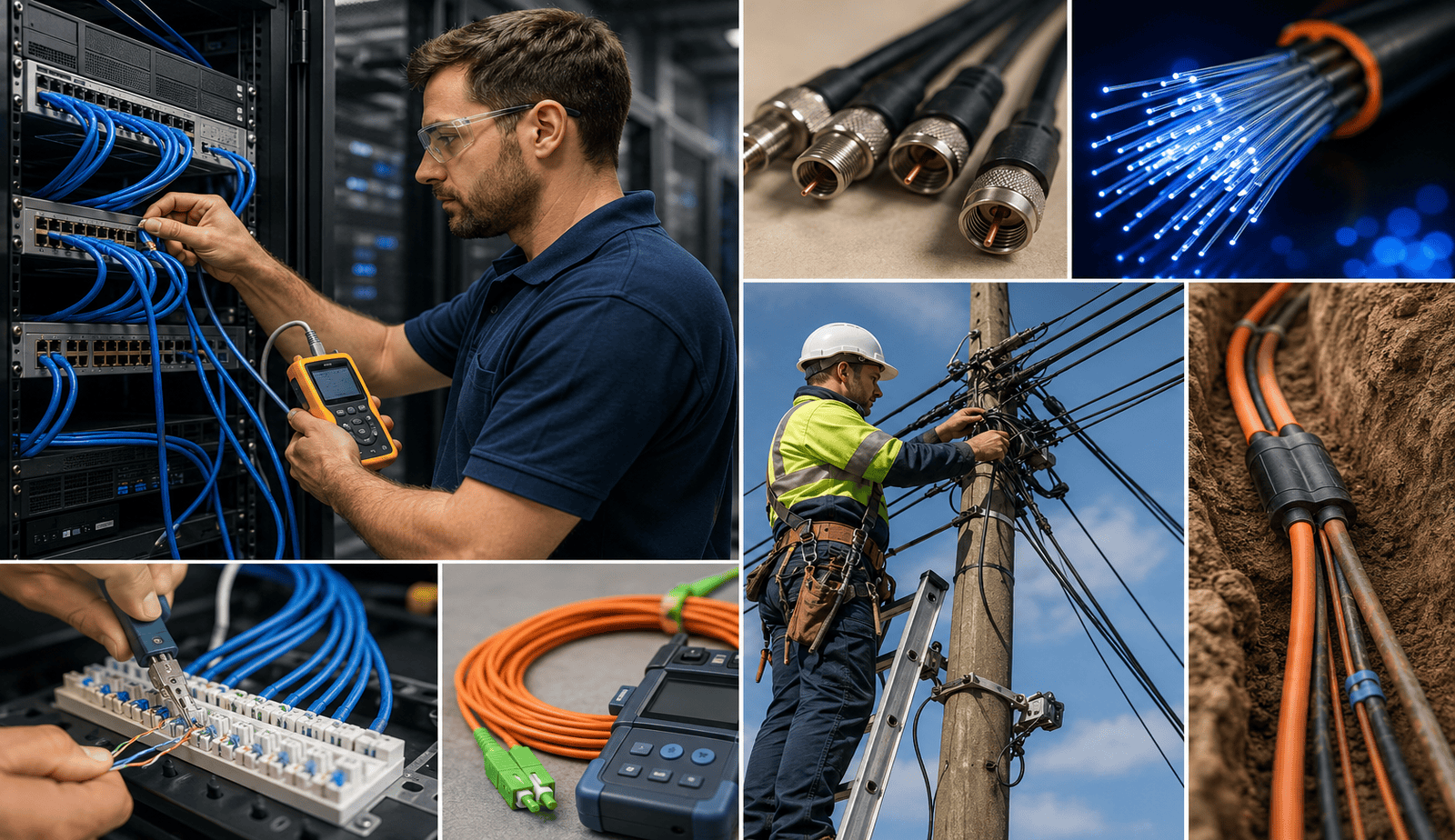
Depending on the type of work, cablers may pursue specialised areas such as:
Structured Cabling
Structured cabling involves installing and certifying cabling systems used for data, communications and network infrastructure.
This can be particularly relevant to commercial and business environments.
Coaxial Cabling
Coaxial cabling is used in various communications and signal distribution applications.
Training in this area can help cablers develop skills in coaxial cable installation, termination and testing.
Optical Fibre Cabling
Optical fibre is an important part of modern high-speed communications infrastructure.
Fibre-related training can cover installation, termination, testing and other practical skills associated with optical fibre systems.
Aerial Cabling
Aerial cabling involves working with telecommunications cables installed above ground.
Because this work can involve additional workplace hazards, appropriate training and competencies are important.
Underground Cabling
Underground telecommunications work can involve activities such as pits, pipes and cable hauling.
Workers may need additional skills relevant to underground infrastructure and associated workplace safety requirements.
Why Are Specialised Cabling Skills Becoming More Important?
Modern telecommunications networks are increasingly diverse.
A cabler may encounter different technologies and infrastructure depending on the project.
For example, a telecommunications project may involve:
- Copper cabling
- Fibre optic networks
- Structured cabling
- Coaxial systems
- Underground infrastructure
- Aerial infrastructure
- Customer premises equipment
Developing additional competencies can therefore help professionals broaden their technical capabilities.
However, workers should always ensure that their registration and competencies match the type of cabling work they undertake.
What Does an ACMA Cabling Course Teach?
An ACMA cabling course is designed to develop the knowledge and practical skills required for the relevant competency pathway.
Depending on the course, training may cover:
- Telecommunications cabling fundamentals
- Workplace health and safety
- Electrical safety
- Cabling installation
- Cable termination
- Testing and compliance
- Documentation
- Customer premises cabling
- ACMA cabling requirements
- Industry standards
- Practical cabling techniques
The exact units and training outcomes depend on the course.
For example, MILCOM’s current ACMA Open Registration/Cablers Licence course includes four units and covers areas such as electrical skills, WHS procedures, ACMA cabling requirements, multi-pair cabling, testing, termination and cabling documentation.
Is an ACMA Cabling Course Enough to Become a Registered Cabler?
Not necessarily.
This is one of the most important points for anyone researching an ACMA cabling course.
Completing relevant training can provide the competency component of the pathway, but applicants may also need to meet experience and registration requirements.
For Open Registration, ACMA’s current requirements include 360 hours of relevant actual cabling experience, along with other specified criteria.
After completing the relevant requirements, applicants apply for registration through an authorised cabling registrar.
Therefore, it is better to think of an ACMA course as part of the registration pathway, rather than as the registration itself.
ACMA Open Registration vs Specialised Endorsements
Understanding the difference can make choosing further training easier.
| Area | Purpose |
| Open Registration | Broad customer premises cabling registration pathway |
| Structured Cabling | Specialised skills for structured network cabling |
| Coaxial Cabling | Skills for coaxial cabling systems |
| Optical Fibre | Skills for fibre optic cabling |
| Aerial Cabling | Skills associated with aerial telecommunications cabling |
| Underground Cabling | Skills associated with underground infrastructure |
The specific registration and competency requirements depend on the type of work being performed.
What Career Opportunities Can Cabling Skills Support?
Qualified and appropriately registered telecommunications cablers can work across a range of environments.
Potential career pathways may include:
- Telecommunications cabler
- Data cabler
- Fibre optic technician
- Network cabling technician
- Telecommunications installer
- NBN-related technician roles
- Structured cabling technician
- Security system cabling roles
- Infrastructure installation roles
Actual job responsibilities depend on qualifications, registration, competencies, experience and employer requirements.
As technology and network infrastructure continue to evolve, technical cabling skills remain relevant across many Australian projects.
Why Practical Experience Matters in Telecommunications Cabling
Cabling is a hands-on profession.
Workers need to understand how theoretical requirements translate into real installations.
Practical experience can help develop skills such as:
- Cable preparation
- Termination
- Testing
- Fault identification
- Cable routing
- Installation techniques
- Documentation
- Working safely around infrastructure
- Customer communication
Experience also helps new cablers understand the realities of working on active jobsites and customer premises.
This is why a combination of training and supervised workplace experience is valuable.
How to Choose an ACMA Cabling Course in Australia
If you’re searching for an ACMA cabling course, don’t choose a provider based only on course duration or price.
Consider the following:
Check the Units of Competency
Understand exactly which units are included and whether they align with your intended registration pathway.
Look for Practical Training
Cabling is a hands-on occupation. Practical training can help learners develop confidence with tools, equipment and installation procedures.
Understand the Registration Pathway
Confirm what happens after completing the course and what additional experience or registration steps are required.
Consider Future Endorsements
If you plan to work with structured cabling, coaxial or optical fibre systems, investigate the additional competencies you may need.
Check Training Locations and Delivery
Face-to-face and blended options may be available depending on the provider and course.
Choose Relevant Training
Your course should match your intended work environment and career goals.
Why Choose MILCOM for Cabling Training?
MILCOM Institute is an Australian Registered Training Organisation offering telecommunications and technical training.
Its current telecommunications training pathway includes ACMA Open Registration, Structured Cabling, Coaxial Cabling, Optical Fibre and other specialist telecommunications courses.
MILCOM’s Open Registration course covers relevant competency units and practical skills for telecommunications cabling, while additional courses can help learners develop specialised capabilities.
For example, MILCOM’s Structured Cabling course covers ICTCBL301 – Install, terminate and certify structured cabling installation, while its broader cabling pathway includes specialised options for coaxial and optical fibre cabling.
The important point for prospective students is to choose a pathway that matches the type of telecommunications work they want to perform.
Frequently Asked Questions About ACMA Cabling Registration
What is an ACMA cabling licence?
“ACMA cabling licence” is a commonly used term for cabler registration under Australia’s telecommunications cabling framework. ACMA regulates the framework, while authorised cabling registrars manage cabler registrations.
How do I become an ACMA registered cabler?
You generally need to complete the relevant competency requirements, gain the required practical experience and apply for registration through an authorised cabling registrar.
How many hours of experience are required for Open Registration?
The current ACMA experience requirements include at least 360 hours of actual cabling work for Open Registration, with the experience meeting additional specified conditions.
Does completing an ACMA cabling course automatically give me registration?
No. Completing relevant training is part of the pathway, but registration involves additional requirements, including practical experience and an application through an authorised registrar.
What is ACMA Open Registration?
Open Registration is a broad cabling registration category for eligible cabling providers. The scope of work also depends on the competencies and specialised requirements applicable to the work being performed.
Do I need additional training for fibre optic cabling?
If your work involves specialised optical fibre cabling, additional competency requirements may apply. Check the current requirements relevant to your registration and intended work.
Can an ACMA registered cabler work on NBN infrastructure?
Registration requirements depend on the type of cabling work and who owns the infrastructure. ACMA notes that registered cablers cannot perform or supervise cabling work owned by a telecommunications carrier or NBN under the standard customer-premises registration scope.
Is telecommunications cabling a good career in Australia?
Telecommunications infrastructure supports homes, businesses and digital services across Australia, creating demand for people with relevant technical skills. Career opportunities depend on training, experience, registration, competencies and the requirements of individual employers.
Final Thoughts: Build Your Cabling Career on the Right Foundation
An ACMA cabling licence is commonly searched for by people looking to enter or progress within Australia’s telecommunications industry. But the pathway involves more than completing a course.
Understanding the difference between training, competency, practical experience, registration and specialised endorsements can help you make better decisions about your career.
For those pursuing Open Registration, the current ACMA framework includes a requirement for 360 hours of relevant cabling experience, alongside the applicable competency and registration requirements.
From Open Registration to structured cabling, coaxial and optical fibre competencies, additional skills can help telecommunications professionals expand the types of work they are prepared to undertake.
If you’re researching ACMA cabling courses in Australia, start by identifying the type of cabling work you want to perform and then choose training that aligns with that career pathway.
With the right combination of training, practical experience, registration and ongoing skill development, you can build a stronger foundation for a career in Australia’s telecommunications and cabling industry.