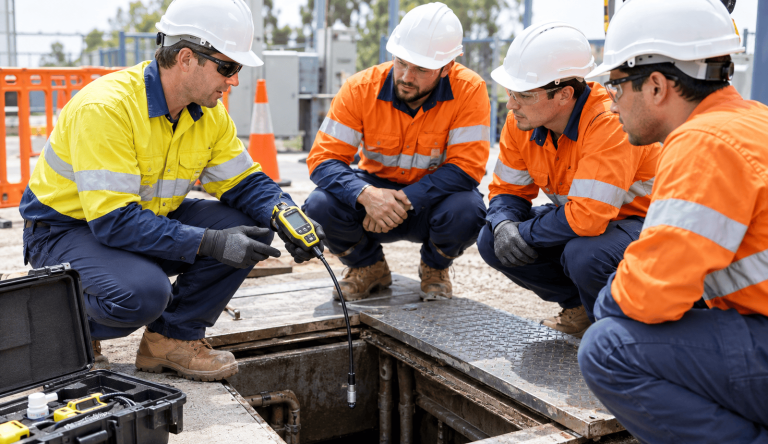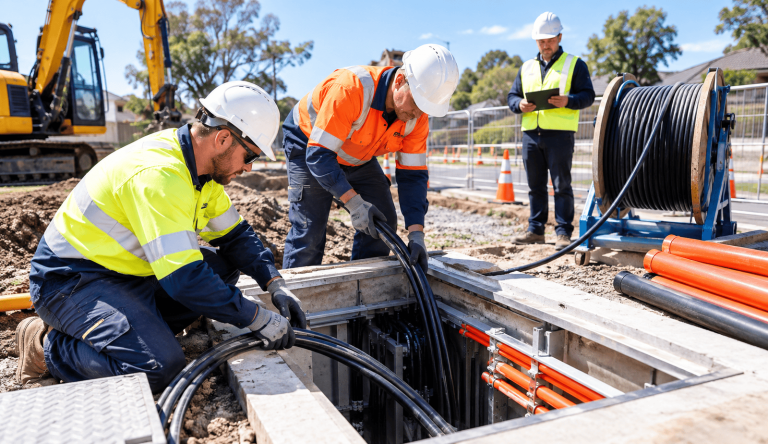

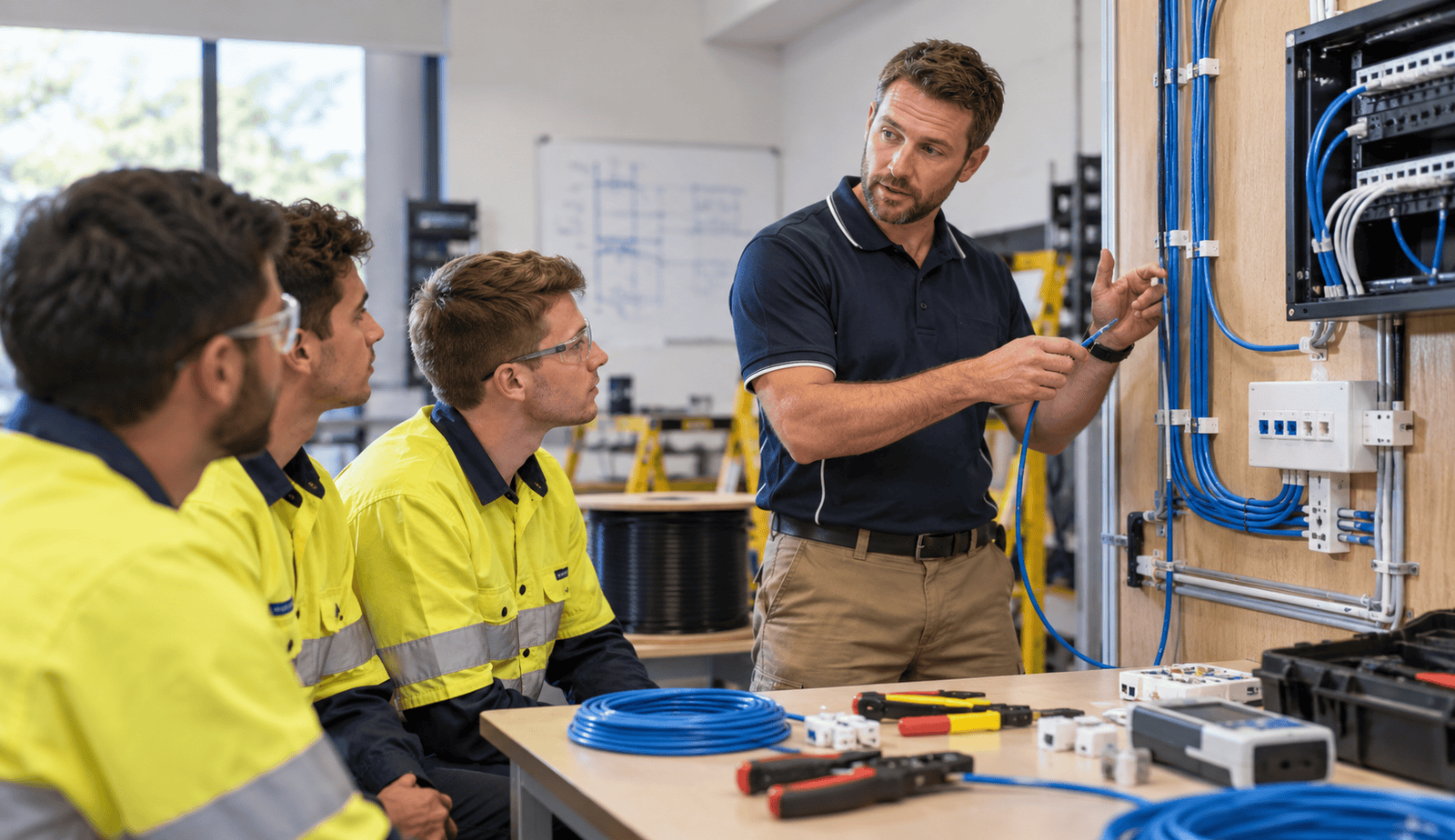
Once you’re an ACMA registered cabler, you can work on new home and office builds, NBN installations, renovation rewiring, security and fire systems, business data networks, pay TV installs and AV setups. In Australia, you can’t legally do most customer cabling work without that registration, so it’s the key that opens all of these doors.
If you like hands-on work, don’t want to sit behind a desk all day and want a skill that stays in demand, cabling is worth a serious look. Every new house, every office fit-out and every home that gets a security camera needs someone qualified to run the cable. That someone could be you.
Below, we break down what registration actually means and the seven types of jobs it can lead to.
What is the ACMA?
The Australian Communications and Media Authority (ACMA) is the government body that regulates communications in Australia. Among other things, it sets the rules for who can install and work on telecommunications cabling. That covers phone lines, data cabling, cabling for connected fire and security systems, and connections to the National Broadband Network (NBN).
The rules exist for a good reason. Poor cabling can damage the network, cause faults for customers and, in some cases, create safety risks. Registration shows you have the training to do the job properly.
Do you need ACMA registration to work as a cabler?
Yes. If you want to install, connect or maintain customer cabling in Australia, you need to be registered with an ACMA-accredited cabling registrar. To get registered, you’ll complete approved training that covers the technical side of the job as well as safety and compliance.
There are two main types of registration:
- Restricted registration: covers simpler work, generally in homes and small businesses.
- Open registration: covers the full range of cabling work, including larger commercial jobs.
You can also add endorsements for specialist areas such as structured cabling, coaxial cable or optical fibre. The more endorsements you hold, the more jobs you can take on.
7 jobs you can land as a registered cabler
Here are some of the most common roles you can move into once you become registered with the ACMA.
1. Installing communications cabling in new homes and offices
Australia keeps building. Standalone homes, new housing estates and apartment blocks all need phone and data cabling installed before anyone moves in. People expect to plug in their modem on day one and get online, and that only happens if a registered cabler has done the groundwork.
This work usually runs alongside builders and electricians, so you’ll often have a steady pipeline of jobs while construction is busy.
2. Installing NBN and telecommunications infrastructure
The NBN is still being upgraded across the country, and qualified cable installers are needed in most regions to connect premises and maintain the network. It’s one of the fastest ways to start earning once you’re registered, and depending on the work, an optical fibre endorsement can make you even more useful to employers.
3. Rewiring cabling and sockets during renovations
Plenty of Australians buy older homes with plans to renovate, either to suit a modern lifestyle or to add value before selling. Older phone sockets and outdated cabling often don’t meet today’s standards, so they need to be replaced. Renovators and builders regularly call in registered cablers to bring everything up to scratch.
4. Installing monitored security systems and fire alarms
Security tech has come a long way. Modern systems use HD cameras, digital recorders and apps that let owners check their property from their phone. Many of these systems, along with monitored fire alarms, connect to the telecommunications network, which is where your cabling skills come in.
There’s work both in fitting new systems and upgrading old ones. Keep in mind that security installation may also need a separate licence depending on your state or territory, so check the local rules before you start.
5. Installing data cabling for computer networks
Lots of businesses now store their files and run their software in the cloud. But their computers, phones, printers and Wi-Fi access points still need a reliable local area network (LAN) to reach it. A registered cabler designs and installs that structured cabling so the whole office runs smoothly.
Commercial data cabling tends to be well-planned, higher-value work, and it’s a common path for cablers who want to grow into bigger projects.
6. Pay TV installer
Pay TV installers connect antennas, run coaxial cables and fit wall outlets so customers can watch their services. The jobs are usually quick and varied, and you’ll spend your days visiting different homes rather than working on one site for weeks.
7. AV installer
Audio-visual setups are getting smarter every year, both at home and at work. Homeowners want whole-house audio and home theatres, while businesses need reliable boardroom screens, video conferencing and meeting room systems. Many of these jobs need a qualified installer to get the cabling right, which makes AV a great niche for anyone who loves new tech.
Which cabling job suits you?
Not sure where to start? This quick comparison might help.
| Job | What the work looks like | A good fit if you… |
| New build cabling | Pre-wiring houses, estates and apartments before walls go up | Like steady work alongside builders and electricians |
| NBN installation | Connecting premises and working with fibre and network gear | Want a clear path into the telco sector |
| Renovation rewiring | Replacing old sockets and cabling in existing homes | Enjoy problem-solving in older buildings |
| Security and fire systems | Installing cameras, alarms and monitored systems | Are interested in tech and safety |
| Data and LAN cabling | Running structured cabling for offices and businesses | Prefer commercial jobs and neat, planned work |
| Pay TV installation | Antennas, coaxial cable and wall outlets | Like quick, varied residential call-outs |
| AV installation | Home theatres, boardrooms and meeting spaces | Enjoy the latest gadgets and client-facing work |
How to become an ACMA registered cabler
The process is simpler than most people expect:
- Choose the right course. Enrol with a registered training organisation (RTO) that offers ACMA-approved cabling training.
- Complete your training. Learn the technical skills, safety practices and wiring standards you’ll need on the job.
- Apply to a registrar. Submit your qualifications to an ACMA-accredited cabling registrar.
- Get registered and start working. Once approved, you’ll receive your registration and can begin taking on cabling work.
- Add endorsements over time. Upskill in areas like optical fibre or structured cabling to widen your job options.
Frequently asked questions
Can I do cabling work without ACMA registration?
No. In Australia, most customer cabling work must be done by a registered cabler. Doing it without registration can lead to penalties.
How long does it take to become a registered cabler?
It depends on the course and registration type. Restricted registration courses can be quite short, while open registration with extra endorsements takes longer. Your training provider can give you a clear timeline.
What is the difference between open and restricted registration?
Restricted registration covers simpler work, mostly in homes and small businesses. Open registration lets you do the full range of cabling work, including larger commercial projects.
Is cabling a good career in Australia?
For many people, yes. New builds, renovations, NBN work, business networks and smart home tech all rely on registered cablers, which keeps demand steady across the country.
Do electricians need ACMA registration for data cabling?
Yes. An electrical licence does not cover telecommunications cabling. Electricians who want to install data or phone cabling also need ACMA cabling registration.
Get ACMA registered and job-ready with Milcom
Milcom Communications is a registered training organisation offering courses that help you get qualified, registered through an ACMA-accredited registrar and ready to work.
We offer telecommunication courses for people who want to work as cabling contractors, plus technical security programs that teach you how to connect, install, repair and maintain telecommunications equipment. If the NBN is where you want to be, our NBN training courses will prepare you for installation work across the industry.
Ready to get started? Call us on 1300 369 320 to find the right course for you.