
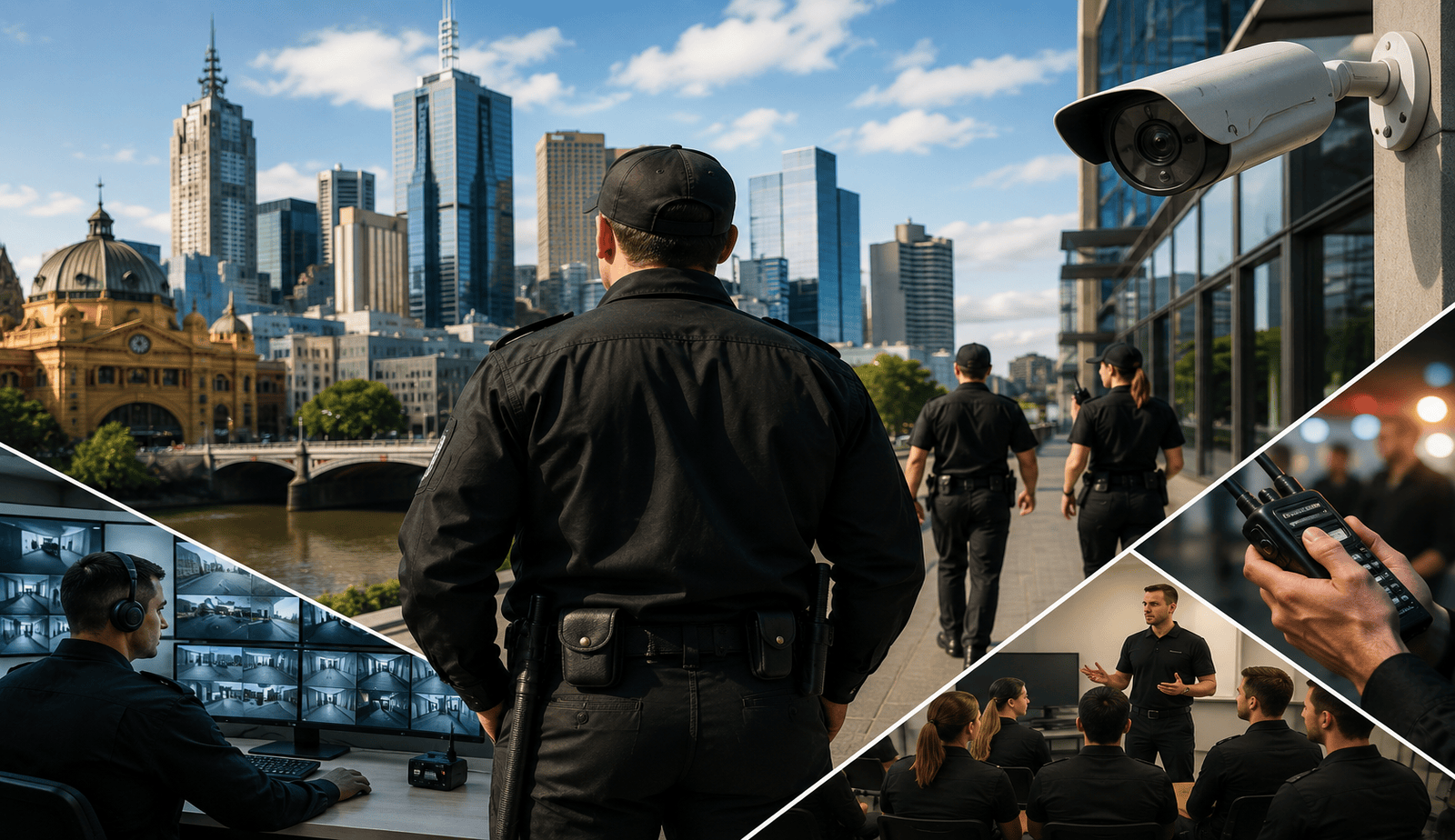
Why are security courses important in Melbourne, what skills do they teach, and how can security training contribute to safer communities and career opportunities?
Melbourne is one of Australia’s busiest and most diverse cities. With major business districts, shopping centres, construction sites, transport hubs, sporting venues, entertainment precincts and public events, security plays an important role in maintaining safe and well-managed environments.
Behind effective security operations are trained professionals who understand how to identify risks, communicate with people, respond to incidents and follow appropriate workplace procedures.
This is why security courses in Melbourne are important not only for people considering a career in the security industry but also for businesses and the wider community.
Security training can help develop practical skills, professional awareness and the ability to respond appropriately when situations change.
In this guide, we’ll explore the importance of security courses in Melbourne, the skills they can provide, career opportunities, community benefits and what to consider when choosing security training.
What Are Security Courses?
Security courses are training programs designed to develop the knowledge and practical skills required for specific roles within the security industry.
Depending on the course and career pathway, training may cover areas such as:
- Security procedures
- Risk awareness
- Incident response
- Communication
- Conflict management
- Emergency procedures
- Customer service
- Workplace safety
- Observation and monitoring
- Professional conduct
- Incident reporting
Different security roles can have different training and licensing requirements, so it is important to choose a course that matches your intended career pathway.
Why Are Security Courses Important in Melbourne?
Security courses help prepare people to work professionally and responsibly in environments where safety, risk awareness and effective communication are important.
Melbourne’s population, commercial activity and event calendar create a wide range of environments where security services may be required.
Security professionals can work across retail, commercial, construction, hospitality, events, residential and other environments.
Appropriate training helps professionals understand their responsibilities and prepares them to respond to situations within the scope of their role.
The benefits extend beyond individual employment.
A skilled security workforce can contribute to:
- Safer workplaces
- Better risk awareness
- Professional incident reporting
- Improved emergency preparedness
- Greater community confidence
- Business continuity
- Stronger security awareness
8 Benefits of Security Training in Melbourne
- Supports Community Safety
One of the most important benefits of security training is its contribution to safer environments.
Security professionals can be trained to recognise potential risks, follow established procedures and report incidents through the appropriate channels.
For example, security personnel working at a shopping centre may monitor the environment, identify unusual behaviour, assist customers and report incidents when necessary.
Training helps them understand how to perform these responsibilities professionally.
Risk Awareness
Security work starts with awareness.
Professionals need to understand their surroundings, recognise potential hazards and know when an issue should be reported or escalated.
Developing these skills can contribute to a more proactive approach to security.
- Develops Professional Skills
Security work involves much more than simply monitoring an area.
Professionals may need to communicate with customers, employees, contractors, supervisors and emergency services.
Security training can develop important workplace skills such as:
- Communication
- Observation
- Decision-making
- Problem-solving
- Conflict management
- Teamwork
- Professional conduct
- Incident documentation
These skills can be useful both within security and across other professional environments.
- Improves Emergency Preparedness
Unexpected situations can occur in any workplace or public environment.
Security personnel may be required to respond to incidents according to their role and established emergency procedures.
Training can help participants understand how to:
- Recognise an emergency
- Follow workplace procedures
- Communicate relevant information
- Contact appropriate services
- Assist with site procedures
- Record and report incidents
The objective is not to replace emergency services but to ensure security personnel understand their responsibilities and respond appropriately.
- Helps Businesses Manage Security Risks
Businesses across Melbourne operate in different environments and face different risks.
A retail centre may have different security requirements from a construction site, warehouse, office building or entertainment venue.
Trained security personnel can support businesses through activities such as:
- Monitoring premises
- Access control
- Visitor management
- Incident reporting
- Security patrols
- Emergency procedure support
- Customer assistance
- Site observation
Professional security services can therefore form part of a broader workplace security strategy.
- Creates Career Opportunities
One of the biggest reasons people search for security courses in Melbourne is career development.
The security industry offers different pathways depending on a person’s training, licensing, experience and career goals.
Potential roles may include:
- Security Officer
- Security Guard
- Crowd Controller
- Retail Security Officer
- Event Security Officer
- Static Security Officer
- Site Security Officer
- Control Room Operator
- Security Supervisor
The exact requirements vary between roles.
Anyone considering a security career should check the current Victorian licensing and training requirements before enrolling in a course.
- Builds Confidence and Professionalism
Working in security can involve interacting with people from many different backgrounds and dealing with challenging situations.
Professional training can help participants become more confident when communicating with others and applying workplace procedures.
Confidence, however, should always be supported by professional judgement.
A trained security professional needs to know when to observe, when to communicate, when to report and when to escalate an incident.
This professional approach can help create safer and more controlled environments.
- Supports Community Confidence
People tend to feel more comfortable in environments where appropriate security measures are visible and professionally managed.
Security personnel can contribute to this confidence by maintaining a professional presence and assisting people when appropriate.
This can be particularly important in:
- Shopping centres
- Events
- Entertainment venues
- Commercial buildings
- Construction sites
- Hospitality venues
- Large public gatherings
Security is therefore not only about preventing incidents. It can also contribute to creating an environment where people feel comfortable going about their daily activities.
- Helps Professionals Adapt to Changing Security Challenges
Security requirements continue to change.
Technology, workplace environments, public events and new forms of risk can influence how organisations approach security.
Modern security professionals may encounter technologies such as:
- CCTV systems
- Access control systems
- Alarm systems
- Monitoring platforms
- Communication equipment
- Digital reporting tools
Training and ongoing professional development can help individuals remain familiar with changing technologies, procedures and workplace expectations.
How Does Security Training Support Melbourne’s Community?
Community safety involves more than security guards and security companies.
It can involve cooperation between:
- Residents
- Businesses
- Security professionals
- Emergency services
- Law enforcement
- Venue operators
- Property managers
- Community organisations
Security professionals can contribute by observing situations, following appropriate procedures, reporting concerns and communicating relevant information to the appropriate people.
This helps create a culture where safety and security are treated as shared responsibilities.
Security Professionals and Law Enforcement: What’s the Difference?
A common misconception is that security professionals have the same role as police.
They do not.
Security personnel and law enforcement officers have different responsibilities, powers and legal roles.
Security professionals generally work within the responsibilities assigned to their position, employer and licence conditions.
Their role may involve monitoring, protecting property, controlling access, reporting incidents and supporting workplace procedures.
Police and other law enforcement agencies are responsible for enforcing the law and responding to matters within their jurisdiction.
Effective communication between security personnel and relevant authorities can be important when an incident requires police involvement.
What Skills Do Security Courses Teach?
The skills covered depend on the specific course and role, but security training can involve several important areas.
Communication Skills
Security professionals regularly interact with customers, employees, contractors and members of the public.
Clear and respectful communication is essential.
Observation Skills
Security personnel need to remain aware of their environment and identify situations that may require attention.
Conflict Management
Security work can sometimes involve difficult conversations or challenging behaviour.
Training can help participants understand appropriate communication and de-escalation approaches.
Incident Reporting
Accurate reporting is an important part of professional security work.
Personnel may need to document what happened, when it happened and what actions were taken.
Risk Awareness
Understanding potential hazards and security risks can help professionals take appropriate action within their responsibilities.
Are Security Courses in Melbourne Suitable for Beginners?
Yes, many security training pathways are designed for people entering the industry, but suitability depends on the specific course, entry requirements and intended job role.
If you’re new to security, start by identifying the type of work you want to perform.
For example, you may be interested in:
- Security guarding
- Crowd control
- Event security
- Retail security
- Commercial security
- Site security
Once you know your preferred direction, you can investigate the training and licensing requirements associated with that role.
How to Choose the Right Security Course in Melbourne
Choosing the right course is an important step.
Don’t select a course simply because it has the words “security training” in its title.
Consider these factors instead.
- Check the Course Requirements
Understand eligibility, prerequisites and any licensing requirements.
- Confirm Recognition
If you’re completing nationally recognised training, check the qualification or unit details and the training provider’s registration status.
- Look for Practical Learning
Security is a practical profession.
Where appropriate, practical activities can help learners understand how knowledge applies to real workplace situations.
- Consider Your Career Goal
The right course depends on the job you want.
A person interested in crowd control may require a different pathway from someone pursuing another security role.
- Consider Ongoing Training
Security professionals may benefit from additional training and professional development throughout their careers.
Security Training and Victorian Licensing Requirements
If you’re planning to work as a security professional in Victoria, it is important to understand that training and licensing are connected but are not necessarily the same thing.
The requirements can depend on the specific security activity or role you intend to perform.
Before enrolling, prospective students should check the current requirements from the relevant Victorian government authority and ensure their chosen training pathway matches their intended occupation.
This is particularly important because licensing requirements can change.
Why Is Ongoing Security Training Important?
Completing an initial course is only one part of professional development.
Security professionals may encounter new technologies, workplace procedures, risks and operational environments throughout their careers.
Ongoing learning can help professionals maintain and improve skills such as:
- Communication
- Incident response
- Workplace safety
- Security awareness
- Technology use
- Professional conduct
For employers, ongoing training can also help support a culture of continuous improvement.
The Future of Security Careers in Melbourne
Security is evolving alongside technology and society.
Traditional security responsibilities are increasingly supported by technologies such as CCTV, electronic access control, alarms, monitoring systems and digital reporting.
This means future security professionals may need a combination of:
People skills + security knowledge + technology awareness + professional judgement.
The ability to communicate effectively while understanding modern security systems can become increasingly valuable.
For people entering the industry, this makes choosing relevant training and continuing to develop skills particularly important.
How Security Courses Can Benefit the Wider Community
The benefits of security education can extend beyond employment.
A professionally trained security workforce can contribute to:
Safer Public Environments
Security personnel can support appropriate safety and security procedures in public and private spaces.
Greater Awareness
Training can encourage stronger awareness of potential risks.
Better Incident Reporting
Professionals can learn the importance of accurate and timely reporting.
Stronger Workplace Safety
Security personnel can support established workplace procedures and emergency responses.
Community Confidence
A professional security presence can help people feel more comfortable in certain environments.
Career Development
Security training can provide individuals with skills that support employment and professional growth.
Why Security Education Is an Investment in Melbourne’s Future
Melbourne will continue to grow, change and adopt new technologies.
As businesses expand and public environments become increasingly connected and complex, security professionals will continue to have an important role.
Security education helps develop people who are prepared to work responsibly, communicate professionally and respond appropriately within their role.
For individuals, this can create opportunities for career development.
For businesses, trained personnel can support workplace security strategies.
For the community, professional security services can contribute to safer and more welcoming environments.
Frequently Asked Questions About Security Courses in Melbourne
What are security courses in Melbourne?
Security courses in Melbourne are training programs that develop knowledge and skills for specific roles within the security industry. Depending on the course, subjects may include communication, security procedures, risk awareness, incident reporting, conflict management and emergency response.
Why should I study a security course in Melbourne?
A security course can help you develop industry-relevant skills and may support a pathway into security-related employment, subject to the licensing and training requirements for your chosen role.
What jobs can I get after security training?
Depending on your training, licence and experience, potential roles can include security officer, security guard, crowd controller, event security officer, retail security officer and site security officer.
Do security workers need a licence in Victoria?
Certain security activities in Victoria require a security licence. Requirements depend on the type of security activity being performed. Always check the current Victorian requirements before starting work.
Are security courses suitable for beginners?
Many entry-level security training pathways are suitable for people who are new to the industry, provided they meet the relevant eligibility and course requirements.
What skills do security professionals need?
Security professionals need a combination of observation, communication, problem-solving, conflict management, risk awareness, professionalism and knowledge of relevant procedures.
How does security training benefit the community?
Security training can help develop professionals who are better prepared to identify risks, follow procedures, report incidents and support safer environments.
Is security training a good career pathway?
Security can provide a practical career pathway for people interested in safety, communication, observation, responsibility and working in different environments. Career opportunities depend on the individual’s qualifications, licence, experience and chosen role.
Why is ongoing security training important?
Security practices, technologies and workplace environments continue to change. Ongoing training can help professionals keep their knowledge and skills relevant.
Building a Safer Melbourne Through Skills, Training and Awareness
Security is an important part of a thriving city.
From businesses and construction sites to shopping centres, events and public venues, trained security professionals can contribute to safer and better-managed environments.
Security courses in Melbourne can provide more than technical knowledge. They can help individuals develop communication, observation, decision-making, risk awareness and professional skills that can support both career development and community safety.
For anyone considering entering the security industry, the first step is to identify the role you want to pursue and then understand the training and licensing requirements associated with that pathway.
As Melbourne continues to evolve, security professionals who combine relevant training, practical skills, professionalism and a commitment to continuous learning can play an important role in creating safer and more resilient communities.
The future of security starts with people who are trained, prepared and ready to make a difference.