
How to Become a Registered, Qualified Cabler in Australia
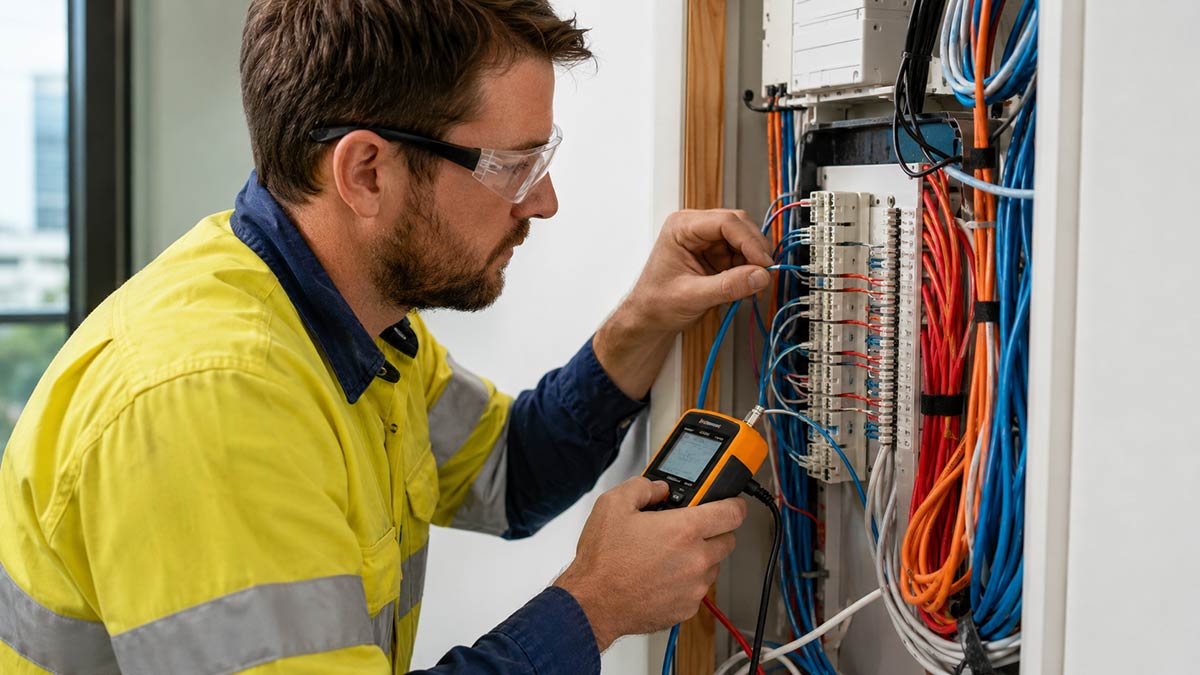
Cablers install, test, locate faults in, and repair the cable networks that carry phone, data and internet services — including the NBN. As Australia’s telecommunications infrastructure keeps expanding, upgrading and replacing ageing networks, demand for licensed cablers remains strong, and that demand isn’t expected to slow down.
Quick answer: how do you become a registered cabler in Australia?
To work legally as a cabler in Australia, you need to:
- Complete the required units of competency through a Registered Training Organisation (RTO), or gain Recognition of Prior Learning (RPL) if you already have industry experience.
- Register with an ACMA-accredited registrar.
- Complete 360 hours of practical cabling work to hold full registration (restricted registration allows supervised work before this is complete).
It’s a criminal offence to carry out unsupervised cabling work without registration, and unregistered work can result in fines.
Two pathways into the cabling industry
1. Training through a Registered Training Organisation (RTO)
The most common route is completing the required units of competency with an RTO such as Milcom. Cabling is precision work — technicians must correctly identify colour-coded wiring, so candidates with colour blindness are not suitable for this line of work.
Course requirements can vary slightly between RTOs, so it’s worth speaking with your provider directly about which units and pathway suit your goals. Milcom’s trainers can help you map out the fastest, most relevant route to gaining your open cabling licence.
2. Recognition of Prior Learning (RPL)
If you’ve already worked in the industry, you may not need to start from scratch. Recognition of Prior Learning (RPL) lets you demonstrate existing skills and experience against the required competencies, potentially fast-tracking your registration.
Why registration with ACMA matters
Every cabler in Australia must register with an Australian Communications and Media Authority (ACMA) accredited registrar. This isn’t a formality — ACMA-accredited registrars enforce a consistent standard across the entire NBN network, protecting both workers and the public from substandard or unsafe cabling work.
Working unregistered and unsupervised is a criminal offence and carries fines. Registration is what makes your work — and your income — legitimate.
How to get registered: step by step
- Enrol with an RTO (such as Milcom) and complete the relevant units of competency.
- Apply for registration with an ACMA-accredited registrar once your training is complete.
- Complete 360 hours of practical, supervised cabling work to move from restricted to open registration.
- Undertake additional training if you plan to work on specialised cabling projects (e.g. certain fibre, coaxial, or optical fibre work), as these may require extra endorsements.
Start your cabling career with Milcom
Milcom is a Registered Training Organisation that helps aspiring cablers build the practical, hands-on skills needed to succeed in the NBN and broader telecommunications industry. Whether you’re starting fresh or applying for RPL based on your experience, Milcom can guide you through the fastest path to registration.